How to use Candle Range Theory: a simple breakdown for beginners (CRT method)
Most people overcomplicate Candle Range Theory the first time they hear about it. I did the same.
But after years of studying the algorithmic behaviour of price, I realised something simple: CRT isn’t a system of 20 rules — it’s a way of reading how the market expands, liquidates, and returns to equilibrium.
Below I’ll walk you through the three core ideas I use every day.
They’re simple, but they change everything once you see them clearly.
The purest form of crt: the three-candle pattern
At its core, CRT is built on a repeating micro-sequence I’ve seen thousands of times.
Whenever the algorithm wants to rebalance price, it tends to follow the same structure:
- an expansive candle – a push designed to grab liquidity and create urgency
- a liquidation candle – price returns and wipes out the expansion
- an opposite expansion – the market breathes out and shows the true direction
This simple pattern—expand → liquidate → reverse—captures the essence of how the algorithm hunts for liquidity and returns to equilibrium.
It’s not “smart money”.
It’s not “institutions”.
It’s just coded behaviour that repeats across all assets and timeframes.

The important part is not predicting the third candle.
It’s recognising when the liquidation has completed and the algorithm is ready to shift direction.
Once you learn to see this sequence, the chart becomes much cleaner and your trading becomes far more intentional.
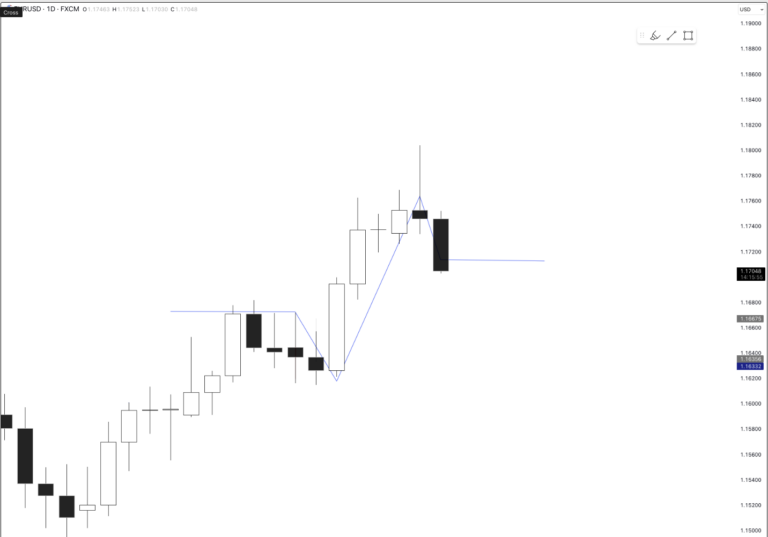
Identifying direction: find a high-timeframe candle that gets liquidated
Before looking for entries, CRT always starts with the same question:
“Which side of the market has already been cleaned?”
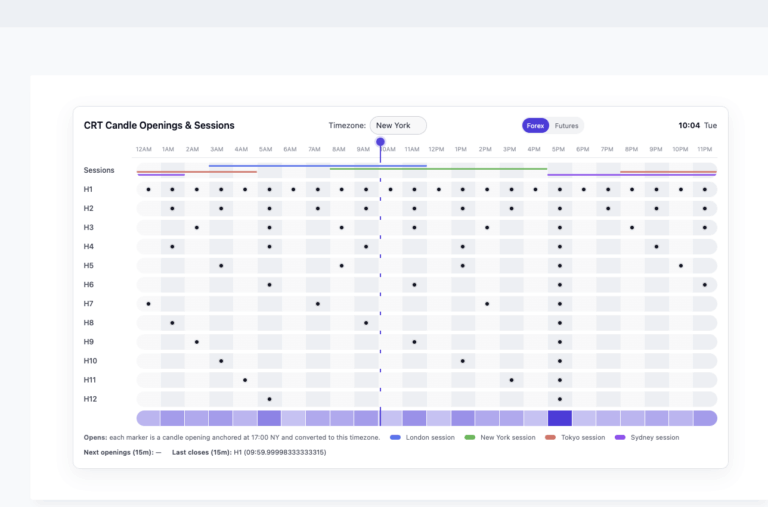
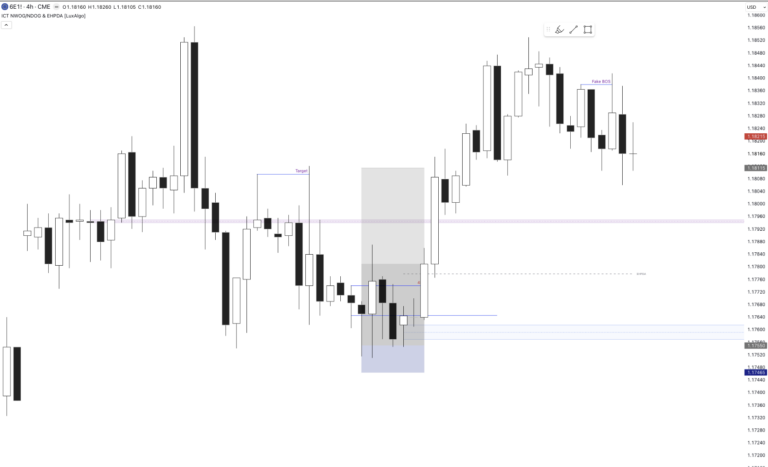
Over time I noticed that the most reliable way to answer this is by looking at high timeframes (H1, H4, Daily, depending on your style) and finding this structure:
- A candle that gets liquidated (its high or low taken)
- And the next candle closes back inside the previous range
This is the algorithm showing its hand.
When a higher-timeframe candle gets taken and the next one closes inside, it means:
- liquidity has been absorbed
- the expansion has finished its job
- the algorithm is shifting back toward equilibrium
In other words, you finally know the true direction, not the emotional one.

This is the directional anchor.
From here, everything else becomes easier because you stop guessing.
You’re not chasing candles—you’re reading the flow.
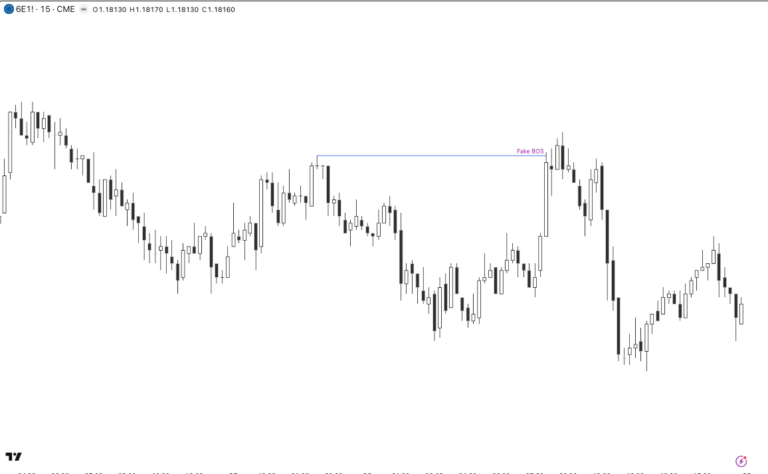
Refining the entry: look for the same sequence on a lower timeframe
Once the high-timeframe direction is clear, CRT simply asks you to confirm the same logic on a lower timeframe.
In my experience, this is where the magic happens.
You zoom in (M15, M5, M1 depending on your pace) and wait for the exact same behaviour:
- a small expansion
- the liquidation of that expansion
- and the expansion in the same direction as the higher timeframe
This is what aligns the flow.
It’s the moment when the algorithm synchronises across scales, and trades from these zones tend to be:
- clean
- quick
- and with very low drawdown
No indicators.
No signals.
No noise.
Just a simple, visual, algorithmic sequence repeating on multiple levels.

When both timeframes “speak the same language”, CRT entries feel almost effortless.
You’re no longer trying to predict—just responding to the market’s natural breathing cycle.
The spirit of crt: clean charts, clean thinking
A lot of people confuse CRT with smart money concepts or institutional trading.
But the philosophy is very different:
- We don’t assume big banks move the market.
- We assume an algorithmic structure drives price toward liquidity pockets.
- We don’t look for unfair value gaps, OBs, BOS, etc.
- We don’t use indicators.
- We respect the chart in its cleanest form.
CRT is not about forecasting trends.
It’s about understanding when the algorithm has finished one phase and is ready to move into the next.
Once you see that rhythm, your job becomes simple:
- Identify the sweep on a big candle
- Wait for the return inside that range
- Drop to a lower timeframe
- Trade the same micro-sequence in the same direction
That’s it.
The simplicity is what makes it powerful.